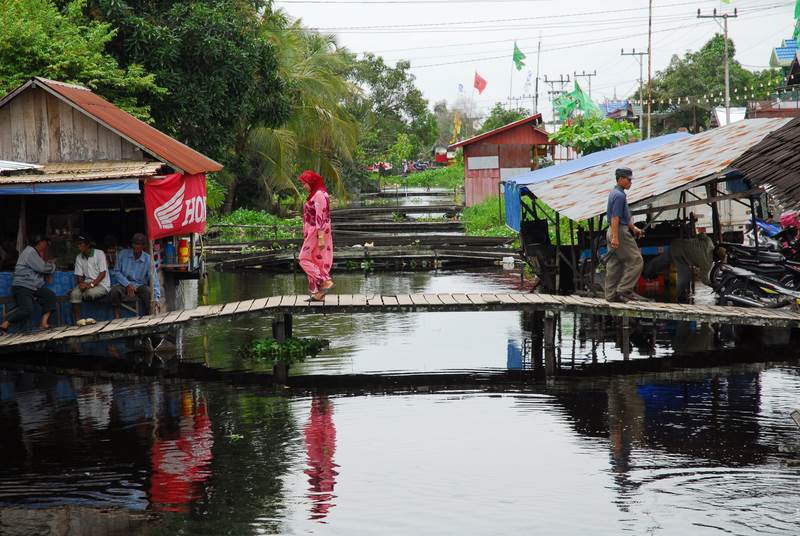
Kalimantan
Kalimantan, the Indonesian part of Borneo, was once the world’s largest tropical rainforests full of some of the most sought-after timber globally. The name Kalimantan which is often spelled Klemantan was derived from Sanskrit word: Kalamanthana which means “burning weather island”, or island with a very hot temperature to describe its hot and humid tropical climate.
The Dayak are the native people of Kalimantan. It is a loose term for over 200 riverine and hill-dwelling ethnic sub-groups, located primarily in the central and southern interior of Borneo, each with its own territory, culture, dialect, customs and laws, even though common differentiating characters are readily identifiable.
Hinduism and Buddhism have had considerable influences on Kalimantan since the ancient times. Proofs of Hindu and Buddhist culture have been recorded here in the form of Sanskrit scriptures and Buddhists and Hindu statues and literature dating between the 5th and 11th centuries. It is also believed that the Dayak indigenous religion is called Kaharingan, a form of animism.
Kalimantan is popular with its lampit, a durable, plain-woven mats, with elaborate woven plant motifs, or illustrative stories of the clan gods and ancestors. Generally, the Dayak people are highly skilled at making various types of rattan mats and basketry, wood crafts, warrior combat shield, tribal spear, warrior lance, each with different names, functions, and decorations depending on which Dayak Desa communities they belong to.