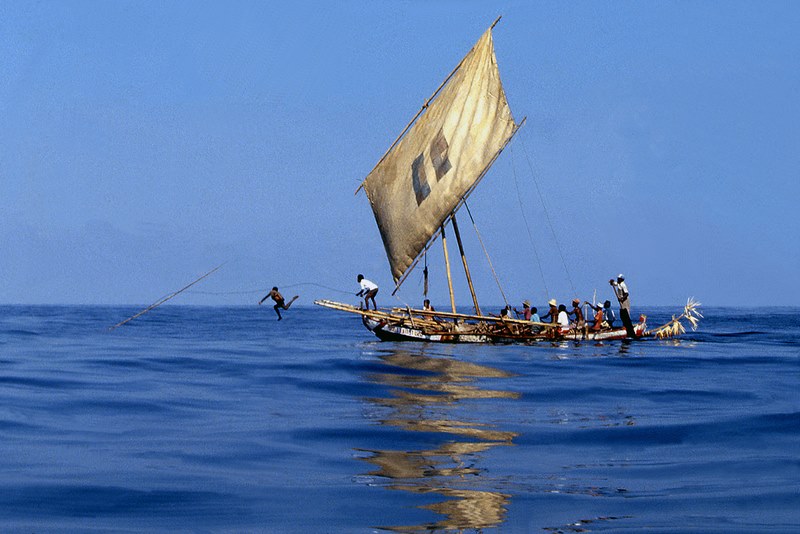
The Lesser Sunda Islands
The Lesser Sunda Islands or Kepulauan Nusa Tenggara Timur or Kepulauan Sunda Kecil are a group of islands in Maritime Southeast Asia, north of Australia. Together with the Greater Sunda Islands to the west they make up the Sunda Islands.
Many unique species live on the Lesser Sundas. They include seventeen endemic birds (of the 273 birds found on the islands). The endemic mammals are the endangered Flores Shrew (Suncus mertensi), the vulnerable Komodo Rat (Komodomys rintjanus), and Lombok Flying Fox (Pteropus lombocensis), Sunda Long-eared Bat (Nyctophilus heran) while the carnivorous Komodo dragon, which is the world’s largest lizard, is found on Komodo, Rincah, Gili Motang, and the coast of northwestern Flores.
The people who live in West Nusa Tenggara have a strong Balinese influence but maintain a unique identity. Sasak, the indigenous people of Lombok are predominantly Moslem and have strong and distinct traditions as do the people of neighboring Sumbawa. Meanwhile, East Nusa Tenggara, which consists of over 550 islands, is dominated by three major islands of Flores, Sumba, and Timor. These islands are blessed with a diversity of unique local languages and traditions. There are many examples of a strong European cultural heritage which is predominantly Catholic and heavily influenced by the Portuguese, like the Easter procession held in Larantuka, and the royal regalia of the former king in Maumere.
As in their neighboring islands, the arts and craft that are special to these regions are made from the materials that they find in their surroundings. The shapes and designs are often inspired by a display of abundant nature, flora and fauna that they see everyday day. From the traditional woven cloth called ikat to the beautiful family heirlooms to famously enormous megalithic tombs and traditional thatched and peaked huts raised on poles.